How to Get Web Design Clients: A Realistic Guide

- The fastest way to get web design clients is to identify local businesses with no website or a broken one, build them a free preview site first, and pitch that finished site directly instead of a portfolio link. Expect roughly 1 paying client per 20-50 targeted outreach attempts when the pitch includes a live preview — closer to 1-in-100 with cold, generic emails.
Why generic "get clients" advice fails beginners
Most web design advice assumes you already have clients. "Ask for referrals" only works if you've delivered projects to refer from. "Post consistently on social media" only works if you already have an audience watching. "Network more" is true but useless without a system — nobody tells you which rooms to walk into or what to say once you're there.
This is the cold-start problem, and it's the actual reason most beginner web designers stall out at zero clients for months. You don't have testimonials. You don't have a case study. You don't have three years of Instagram posts building trust. What you do have is time, a laptop, and the ability to build something before anyone asks you to.
So flip the model. Instead of marketing yourself and waiting for someone to need a website at the exact moment they see your post, go find the businesses that already need one — today, visibly, provably — and show up with the site already built. That's the whole playbook. Everything else in this guide is detail on how to execute it.
Step 1: Find local businesses that actually need a website
The businesses worth pitching are the ones with a clear, visible gap — no website, a broken one, or a design stuck in 2014. You're not looking for "any local business." You're looking for evidence of neglect you can point to in your first message.
Where to search: Google Maps, directories, social pages
Google Maps is the single best free tool for this. Search "plumbers near [city]" or "hair salons near [city]" and click through listings one by one — a shocking number of small businesses list only a phone number and a Facebook page, no "website" button at all. Yelp and industry-specific directories (Houzz for contractors, TripAdvisor-adjacent sites for restaurants) work the same way. Instagram and Facebook business pages are another goldmine: check the bio link. If it points to a Linktree with no actual site, or nothing at all, that's a lead.
Doing this manually, you can realistically screen 30-40 businesses an hour once you get fast at it. That's slow when you need volume. Tools built for this — LumaSite is one — scan local business listings automatically, flag which ones lack a proper website, and generate a ready-to-show preview site for each one in minutes, cutting hours of manual Maps-scrolling down to a filtered list you can start pitching same-day.
Signs a business needs a new site
Not every business without a flashy site is a good target — some genuinely don't need one (a home-based dog walker with 40 regular clients, for example). Look for these signals instead:
| Signal | Why it matters |
|---|---|
| No website, only a Google Business Profile or Facebook page | Clearest gap — easiest pitch, zero site to compare against |
| Site not mobile-friendly (text overflow, tiny buttons) | Roughly 60% or more of local search traffic is mobile; this loses customers daily |
| Copyright year in the footer is 3+ years old | Signals no one's maintaining it — owner may not even know how |
| No online booking, menu, or contact form | Direct revenue loss you can quantify in your pitch |
| Slow load time (5+ seconds) | Easy to demo live on your phone during a walk-in pitch |
| Business type is visually driven (restaurant, salon, photographer, architect) | Bad or missing site actively costs them customers who judge on looks |
A restaurant with 200 Google reviews and no website is a far better lead than a tax accountant with an ugly-but-functional one. The accountant's clients don't choose based on aesthetics; the restaurant's do.
Step 2: Build proof before you pitch (portfolio without clients)
You don't need past clients to have a portfolio — you need finished work, and nothing says a "client" has to have paid for it. Two approaches work well for beginners.
Spec work: pick 2-3 business types in your niche (say, hair salons) and design one-page websites for fictional or real-but-uncontacted businesses, purely to show range. Dribbble and Behance are full of these and it's a legitimate, common practice in the industry — just label them clearly as concept work.
Better than spec work, though, is building a real preview for a real, specific business you're about to pitch. This does double duty: it's portfolio proof AND your outreach asset in one move. Instead of "here's a generic sample," you're showing "here's a website for your actual business, built with your actual name, photos, and services." This is the workflow LumaSite is built around — it generates that real, personalized preview site automatically from a business's existing Google listing and photos, so you're not spending 4-6 hours per prospect designing from scratch before you even know if they'll reply.
Either way, aim for 3-5 finished one-page sites before your first outreach message goes out. That's your floor, not your ceiling.
Step 3: Turn cold outreach into a warm conversation
A pitch stops being "cold" the moment it includes something the recipient can actually click and see. This is the single biggest lever in this entire guide: leading with a live preview link instead of a portfolio link or a generic sales pitch changes the psychology of the message completely. You're no longer asking them to imagine your work or trust your credentials — you're showing them a finished thing with their business name on it, and asking one question: "want this?"
In practice, outreach messages that include a live preview link see meaningfully higher reply rates than portfolio-link pitches, because the recipient's first click resolves into something concrete about *their* business, not a stranger's résumé. It also short-circuits the "let me think about it" stall — there's already a thing to react to.
Email templates that get replies
Keep it under 100 words. Structure: notice something specific, show the preview, ask one low-friction question.
>
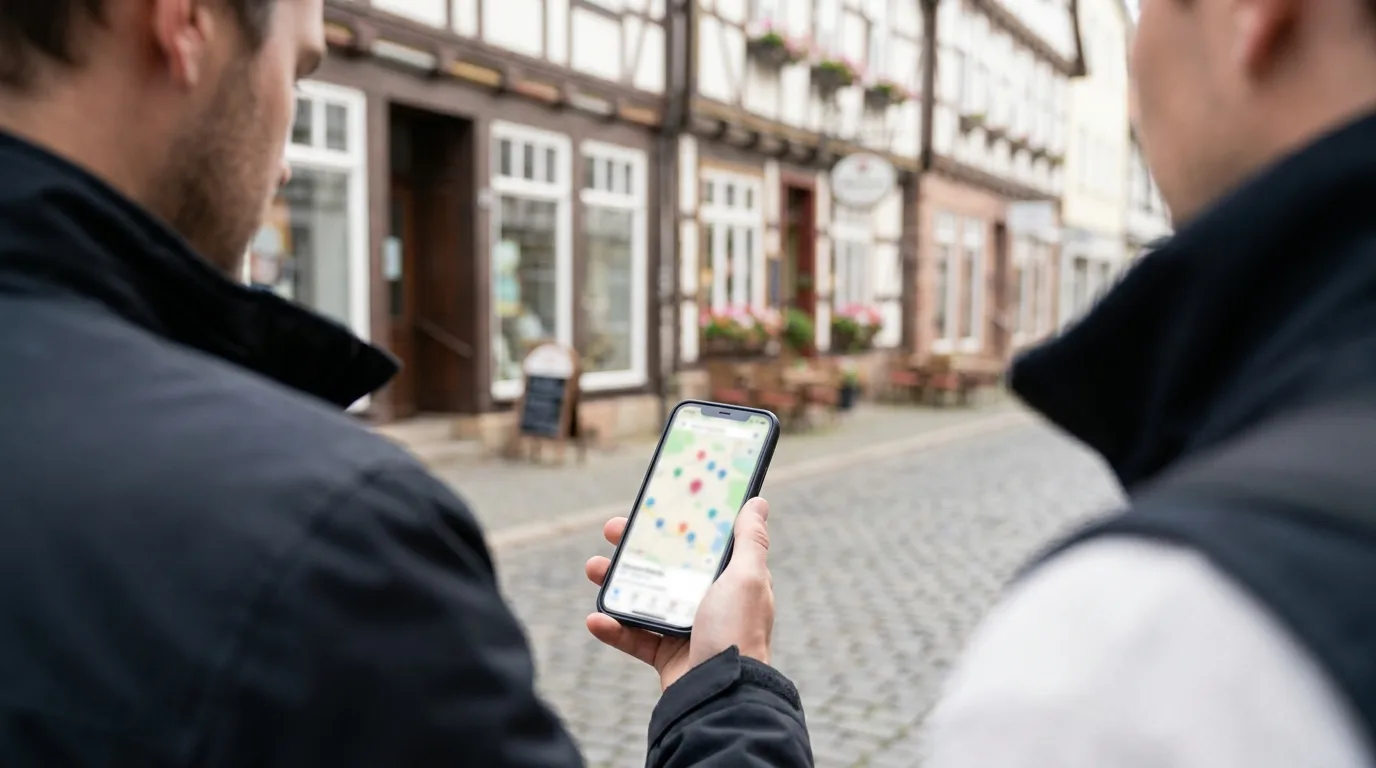
For in-person or DM pitches, the same structure works spoken: "Hey, I noticed you don't have a site — I actually built a quick sample for you, mind if I show you?" Phones out, preview loaded, 90 seconds. That's the whole pitch.
Is cold outreach legal? (GDPR/UWG basics)
Cold emailing businesses about your services is generally legal in many jurisdictions under a "legitimate interest" basis, but the details matter and vary significantly by country. In much of the EU — the UK, France, and the Netherlands, for instance — B2B cold email using publicly available business contact info (a general info@ address, a phone number listed on Google Maps) for a relevant, personalized, one-off outreach is commonly practiced and treated as lower-risk than mass, unsolicited blasts to personal addresses. Germany is a notable exception: its UWG (Unfair Competition Act) Section 7 is stricter than GDPR alone and generally requires prior consent for B2B cold email too, not just outreach to individuals — legitimate interest rarely justifies cold B2B email there, and violations can trigger cease-and-desist letters (Abmahnung) or fines. If you're specifically targeting German businesses, treat cold email as high-risk without consent; phone or LinkedIn-first outreach is the more commonly used compliant alternative there.
Practical rules that keep you safer regardless of jurisdiction: always personalize the message to that specific business, never send to personal/private email addresses, always include an easy way to opt out or say "not interested," and never scrape and blast hundreds of identical emails — both the law and your reply rate punish that equally. If you're outreaching in the EU professionally at volume, it's worth a quick read of your local UWG/GDPR guidance or a 20-minute consult with a lawyer — cheap insurance.
Referrals and word of mouth, systematized
Referrals convert far better than cold outreach, but only if you ask at the right moment with the right structure — "just ask for referrals" isn't a system. The best moment to ask is 1-2 weeks after launch, once the client has seen real results (more bookings, compliments from customers, actual traffic) — not on delivery day when the excitement is still abstract.
Build a simple, repeatable ask: "Do you know one other business owner who'd want something like this?" is a much easier yes than "please refer me to people." Offer a concrete incentive — 10% off their next update, or a free month of maintenance, for every referral that becomes a paying client. Track it in a spreadsheet: client name, date asked, referral given, outcome. After 5-10 completed projects, referrals should be producing at least 1 new client per 3-4 completed jobs if you're asking consistently — if you're not seeing that, you're not asking at the right time or not making the ask concrete enough.
Social media, content, and marketplaces: what's worth your time
Return on time varies wildly by channel, and most beginners spend it in the wrong place. Here's the honest breakdown for someone targeting local businesses specifically, not general freelance clients.
| Channel | Time to first client | Effort level | Verdict for local business targeting |
|---|---|---|---|
| Targeted local outreach + preview sites | 1-4 weeks | Medium | Best ROI for beginners — start here |
| Referrals (once you have 1+ client) | Ongoing, compounds | Low | Highest quality leads, but needs a base first |
| LinkedIn outreach/content | 2-3 months | Medium-high | Better for B2B/agency clients than local shops |
| Instagram (posting portfolio work) | 3-6 months | High | Slow unless niche is visually driven (salons, restaurants) |
| Upwork / Fiverr | 1-3 months | Medium | Fine for volume and portfolio-building, poor margins |
| Blogging / SEO on your own site | 6-12 months | High | Long-term asset, wrong tool for urgent first clients |
LinkedIn and Instagram outreach
LinkedIn works better for agency and B2B clients than for the corner bakery — decision-makers there expect DMs and respond to case-study-driven pitches. Instagram works well specifically for visually-driven niches: if you're targeting restaurants, salons, or photographers, showing before/after site mockups as posts or Reels can generate inbound interest, but budget 3-6 months of consistent posting (3-4x/week) before it produces reliable leads. Neither replaces direct outreach for someone starting from zero.
Freelance marketplaces: pros and cons
Upwork and Fiverr get you paid work fast, but at a cost. Pros: built-in demand, no outreach needed, useful for building your first 2-3 portfolio pieces and reviews. Cons: race-to-the-bottom pricing (one-page sites often listed at $50-150), platform fees of roughly 10-20% (Upwork charges a flat 10% service fee to freelancers, while Fiverr takes a flat 20% seller commission), and clients who are used to comparing you against five other bids on price alone. Use marketplaces to get initial reviews and cash flow in your first month, then migrate off them toward direct local outreach once you have proof to show — don't build a long-term business on them.
Pricing your first projects without underselling
A realistic starting price for a one-page website for a local business is $400-$1,200, depending on your market and what's included. Charging $50 on Upwork trains clients — and you — to think your work is worth nothing.
| Project type | Typical price range | Notes |
|---|---|---|
| One-page site (no CMS, static) | $400-$800 | Good starter offer, fast to deliver |
| Multi-page small business site (5-8 pages) | $800-$2,500 | Includes contact forms, basic local SEO setup |
| Site + ongoing maintenance | +$30-$100/month | Recurring revenue — pursue this from project one |
| Rush delivery (under 1 week) | +20-30% premium | Justifiable when you already have a preview built |
Here's the pricing leverage most beginners miss: if you're pitching with a preview site already built, you're not selling a promise anymore — you're selling a finished product they can see today. That alone justifies pricing at the higher end of these ranges, because you've removed their biggest risk (what if it looks bad?) before they've paid a cent. For the full sales conversation — how to structure the call, handle price objections, and close — see this step-by-step guide to selling websites to local businesses.
The real numbers: how many pitches it takes to land one client
Expect to need roughly 20-50 targeted outreach attempts per paying client when your pitch includes a live preview site — and closer to 80-100 attempts per client with generic, no-preview cold emails. These are rough, self-reported benchmarks from freelancer communities and agency case studies, not a guarantee, but they're useful for setting weekly targets instead of guessing.
Break it down by stage: of 100 outreach messages, expect maybe 15-25 opens/views of the preview link, 5-10 actual replies, 2-4 real conversations (call or in-person), and 1-3 closed clients — again, assuming personalized, preview-led outreach to well-qualified leads (no website or genuinely broken one). Generic pitches with no preview and no qualification often see reply rates under 2%, which is where most beginners quit, thinking the whole strategy doesn't work. It's not the strategy — it's the lack of proof in the first message.
Practical target for your first month: 10 targeted outreach messages a week, all preview-led, all to pre-qualified businesses (no site or outdated site). At a 1-in-30 conversion, that's roughly one client every 3 weeks — modest, but far more realistic than "post on Instagram and wait."
FAQ
How do web designers find clients?
Most web designers combine four channels: referrals, direct outreach, freelance marketplaces, and content/social media. For beginners with no existing network, targeted local outreach — finding businesses with no website and pitching a finished preview — is the fastest path to a first client, typically producing results within 2-4 weeks versus months for content or social strategies.
Is web design still worth it in 2026?
Yes — especially for local small businesses, which still lack decent websites at a surprising rate. AI website builders have made DIY sites easier, but most business owners still don't have the time or design instinct to use them well, which is exactly why "done-for-you" web design for local trades, restaurants, and salons remains in steady demand.
How to get your first 5 clients?
Combine a personal-network list with targeted cold outreach: message everyone you know who owns or works with a small business first, then send 5-10 preview-led pitches per week to local businesses without a website. At realistic conversion rates, 5 clients typically takes 6-10 weeks of consistent outreach — faster if referrals kick in early.
What are the 7 C's of web design?
The 7 C's are a design framework developed by Rayport and Jaworski: context, content, community, customization, communication, connection, and commerce. They're a useful checklist for evaluating a finished site's quality, but not something you need to memorize before landing your first client — good instincts and a working one-page site matter more early on.
Is it legal to cold email local businesses about web design?
Generally yes in most countries, under a legitimate-interest basis for B2B outreach — use publicly listed business contact info, personalize each message to that specific business, avoid mass identical blasts, and include an easy opt-out. Germany is a notable exception: its UWG treats B2B cold email more strictly than GDPR alone and generally requires prior consent, so if you're targeting German businesses specifically, a quick legal check — or a phone/LinkedIn-first approach instead of email — is the safer route.
How many pitches does it take to land one client?
Roughly 20-50 targeted, preview-led outreach attempts per paying client is a reasonable starting expectation, based on typical freelancer benchmarks. Generic cold pitches without a preview often need 80-100+ attempts for the same result — the preview link is what compresses that ratio.
For more on finding and closing local business clients, see the LumaSite blog for additional guides on outreach, pricing, and preview-based selling.
Keep reading

Selling Websites to Local Businesses: The Honest Starter Guide (Side Hustle Friendly)
How to Find Businesses Without a Website: 5 Ways to Your First Web Clients

Average Cost of Website Design for Small Business (2026)

How Can I Make a Website for My Small Business?
One honest guide per week
Free, straight to your inbox — finding clients, selling websites, starting clean. No spam, one click stops them anytime.
✓ Check your inbox — click the confirmation link and you’re in.